
Why Blind Dado Joints Matter (and Most Cabinets Skip Them)
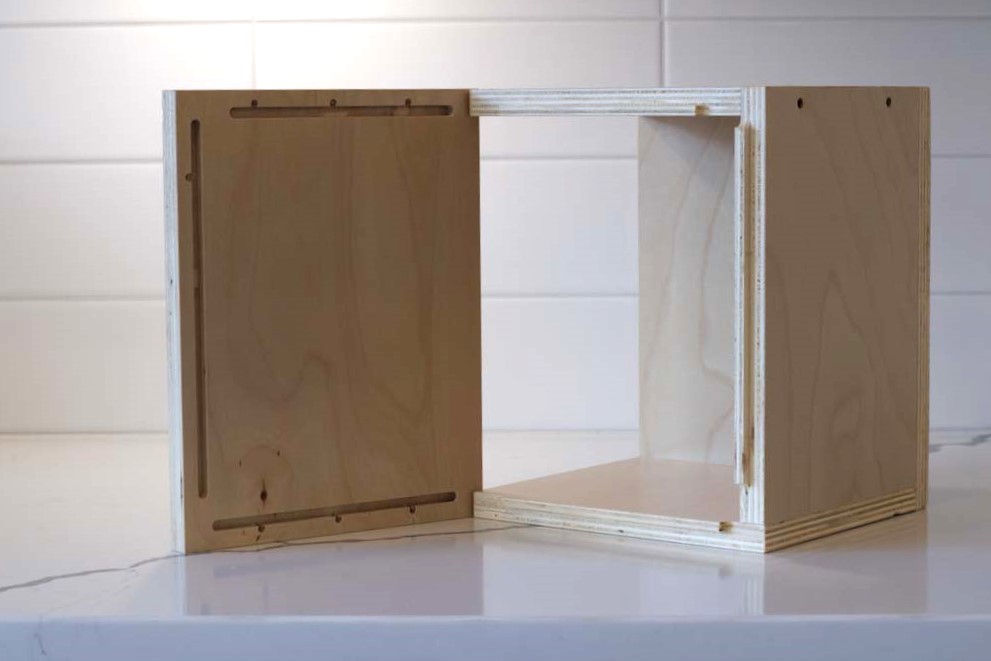
Most of what makes a kitchen cabinet last — or fail — is hidden the moment the doors go on. The single biggest factor is how the box itself is held together. At Comsense, every cabinet is built with a screwed blind dado joint, and it’s one of the main reasons we can back our work with a lifetime warranty. Here’s what that means, and why it matters more than almost anything you can see.
What is a dado joint?
A dado is a precise groove cut into one panel that another panel slots into — like a shelf seated into a channel routed into the cabinet side, rather than just butted against it and fastened. A blind dado means the groove stops short of the front edge, so the joint is completely invisible from the outside. We then screw the joint — no glue-only shortcuts — so the box is mechanically locked together and stays square for decades.

The joint most cabinets actually use
A lot of cabinets — especially flat-pack and budget lines — are assembled with simple butt joints: two panels pushed together and held with dowels, cam locks, or staples. It’s fast and cheap, but those joints rely entirely on the fastener. Over years of slamming drawers, loading heavy dishes, and the swings in humidity every Vancouver Island home sees, butt joints work loose. The box racks out of square, doors stop lining up, and shelves begin to sag.
Why the dado joint wins
- It carries load through the wood, not the fastener. The panel sits inside the groove, so weight is transferred through the joint itself — the screws just hold it tight.
- It stays square. A locked box doesn’t rack, so your doors and drawers keep their alignment for the life of the kitchen.
- It resists our climate. With humidity moving through the seasons, a mechanically interlocked joint holds where a glued butt joint can creep.
- It’s why we can warranty it for life. We’ve never built a cabinet without dado joints, and we don’t intend to start.
You can’t see it — so ask about it
This is the part that’s easy to miss when you’re comparing quotes. Two kitchens can look identical in a showroom and on a 3D render, yet one is built to outlast the other by decades. When you’re shopping cabinets, ask exactly how the boxes are joined. “Dado joint” is the answer you want; “we use dowels and glue” or “stapled” is the answer that should make you pause.
Built on quality plywood, too
A great joint still needs a great panel to bite into. That’s why we cut our dado joints into CARB2-certified plywood rather than particle board, which crumbles and won’t hold a fastener the same way. The joint and the material work together — and we paired them deliberately. (More on that in our guide to CARB2 plywood vs MDF.)
The bottom line
The blind dado joint is invisible, unglamorous, and almost never advertised — and it’s exactly the kind of detail that decides whether your kitchen still feels solid in twenty years. It’s a small thing we refuse to compromise on, because it’s the foundation everything else is built on.
Want cabinets built the right way, from the box out? Book a free consultation and we’ll walk you through how yours would be made — and give you a clear, no-obligation estimate within 24 hours.
Ready to Build It for Real?
Book a free, no-obligation consultation. Our designers will measure your space and send a clear estimate within 24 hours.
- Free in-home consultation & 3D design
- Premium plywood, screwed dado joinery
- Lifetime warranty · licensed, insured & WCB covered
Get Your Free Quote
Tell us about your project — we reply within 24 hours.